
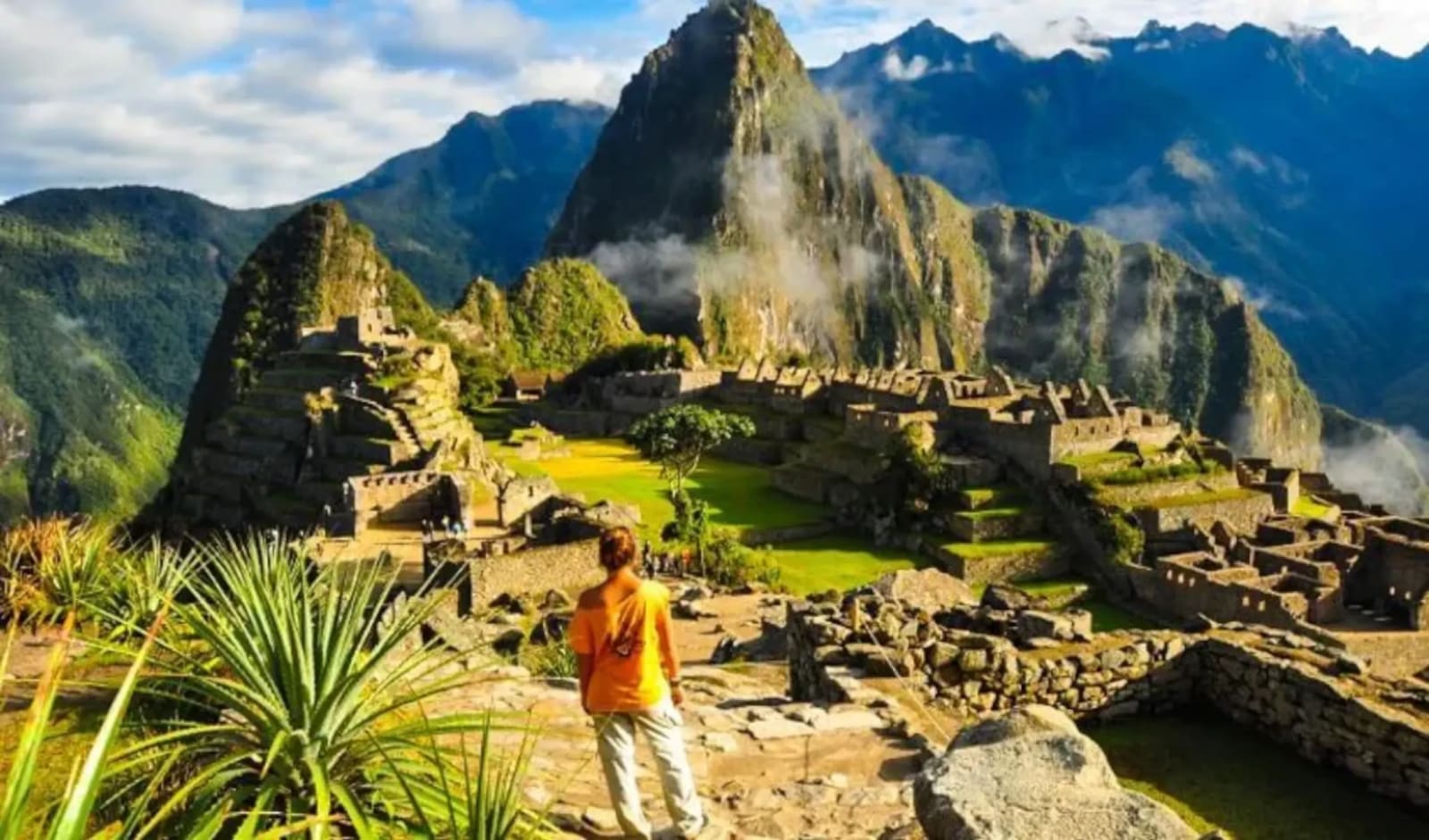
Nine days, two lost cities. Descend into one of the deepest canyons on Earth, explore Choquequirao almost alone, cross three high passes on old Inca roads, and finish at Machu Picchu. A real expedition — made comfortable by our arrieros, mules and trail chef, who carry everything and have camp ready every afternoon.
Trip highlights
- Choquequirao, Machu Picchu's sister city
- Apurímac canyon, 1,500 m deep
- Choquetacarpo Pass 4,600 m on an Inca road
- Cloud forest, hot springs and a coffee farm
- Llactapata and Machu Picchu
Why book direct with a local operator
Our own crew
Guides, chefs and crew are our team in Cusco — no middlemen, no resold departures.
Fair pay
Porters and horsemen are paid fairly, carry legal weights and get proper gear and meals.
Best trail food
Our trail chefs cook fresh Andean dishes three times a day.
Low-impact trekking
Leave No Trace camps, waste carried out, community projects supported.
Day-by-day itinerary
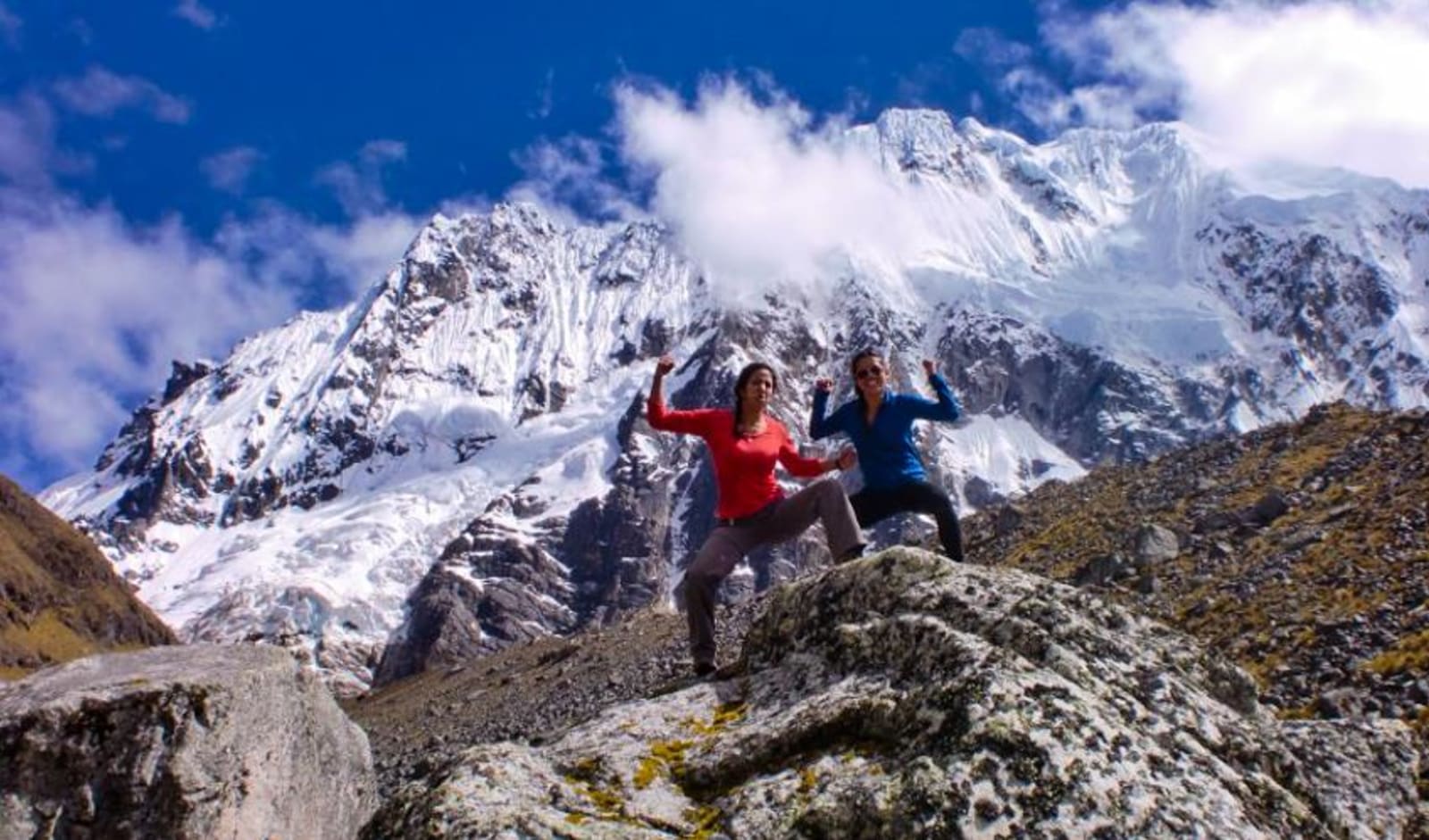
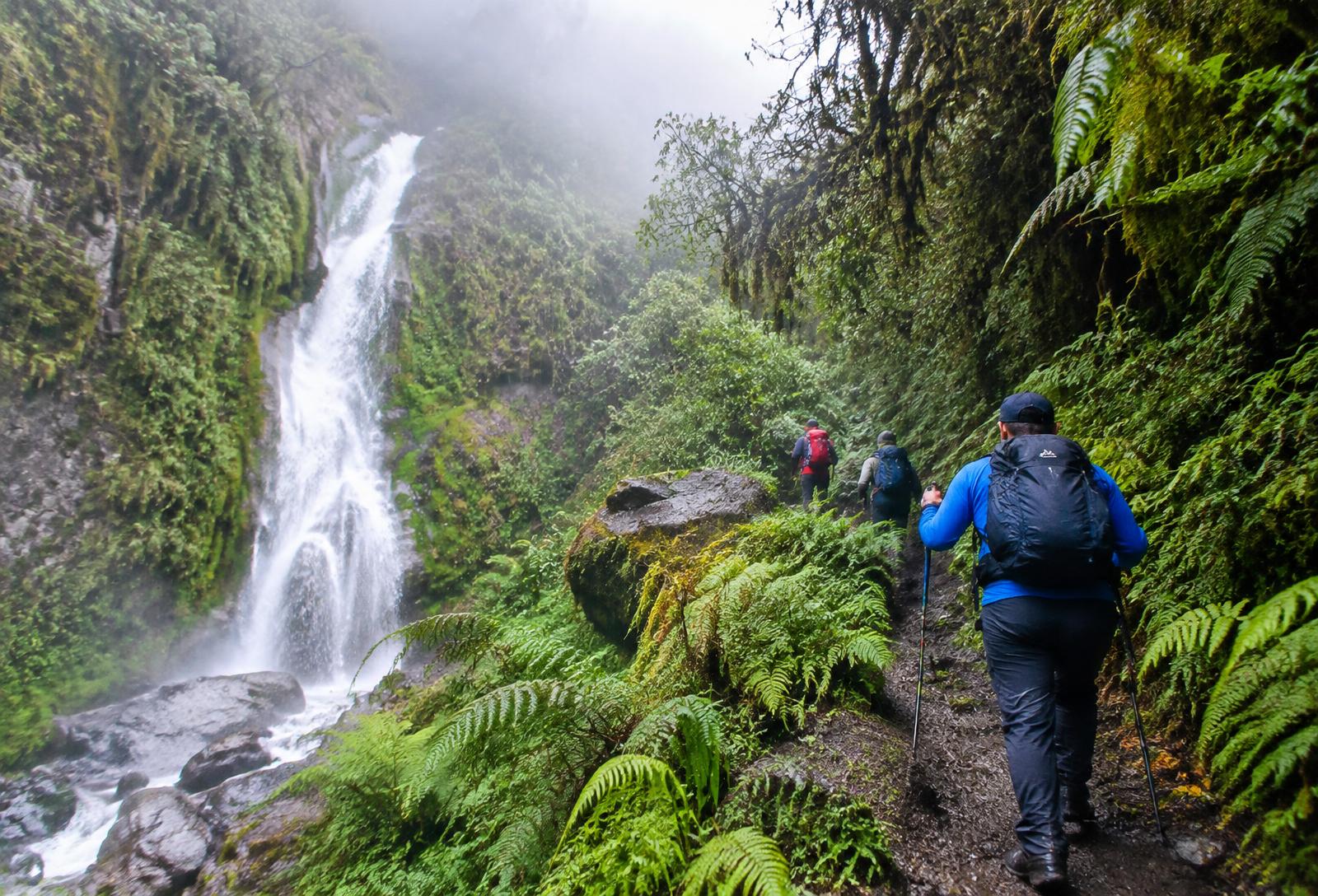
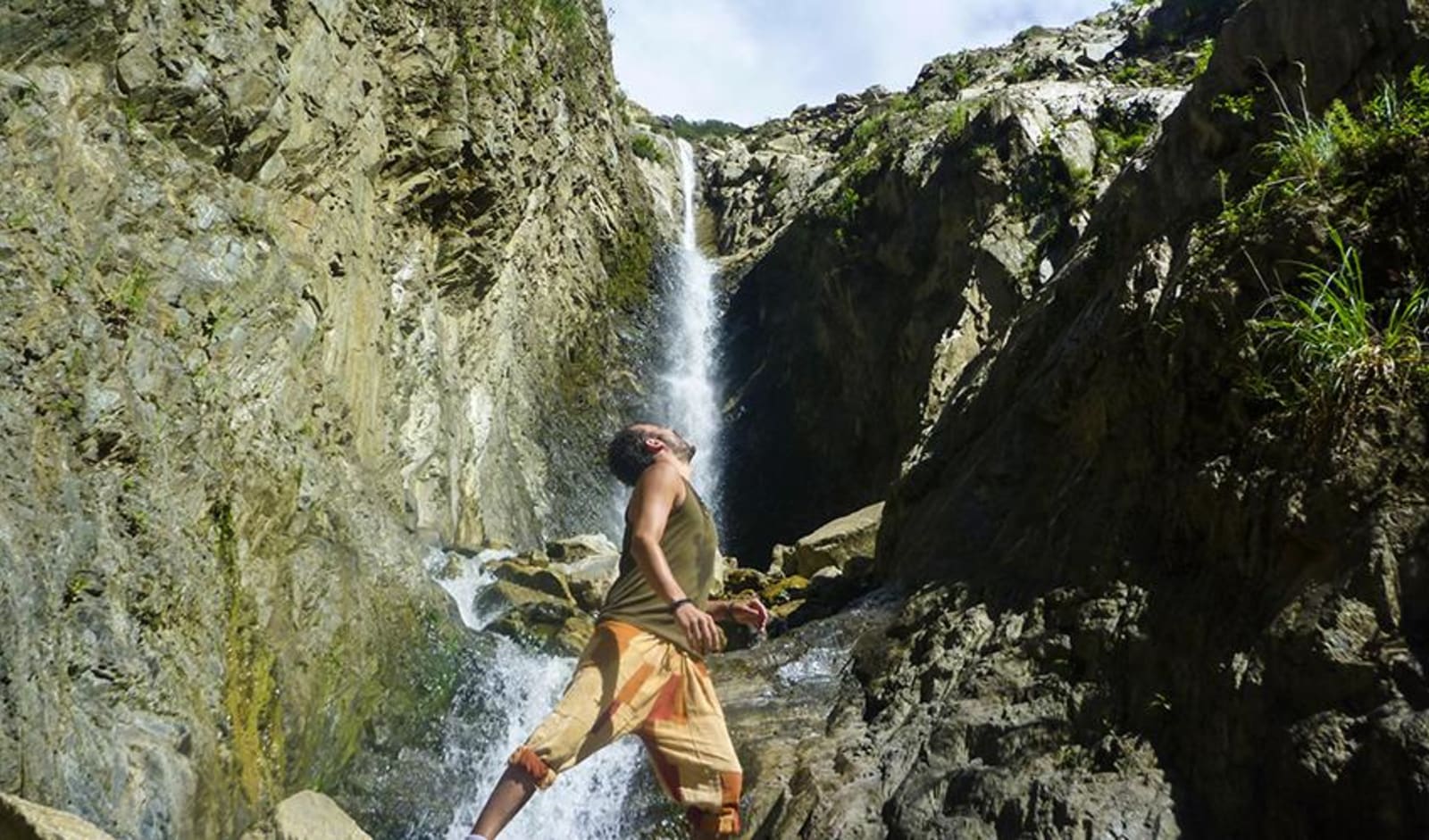
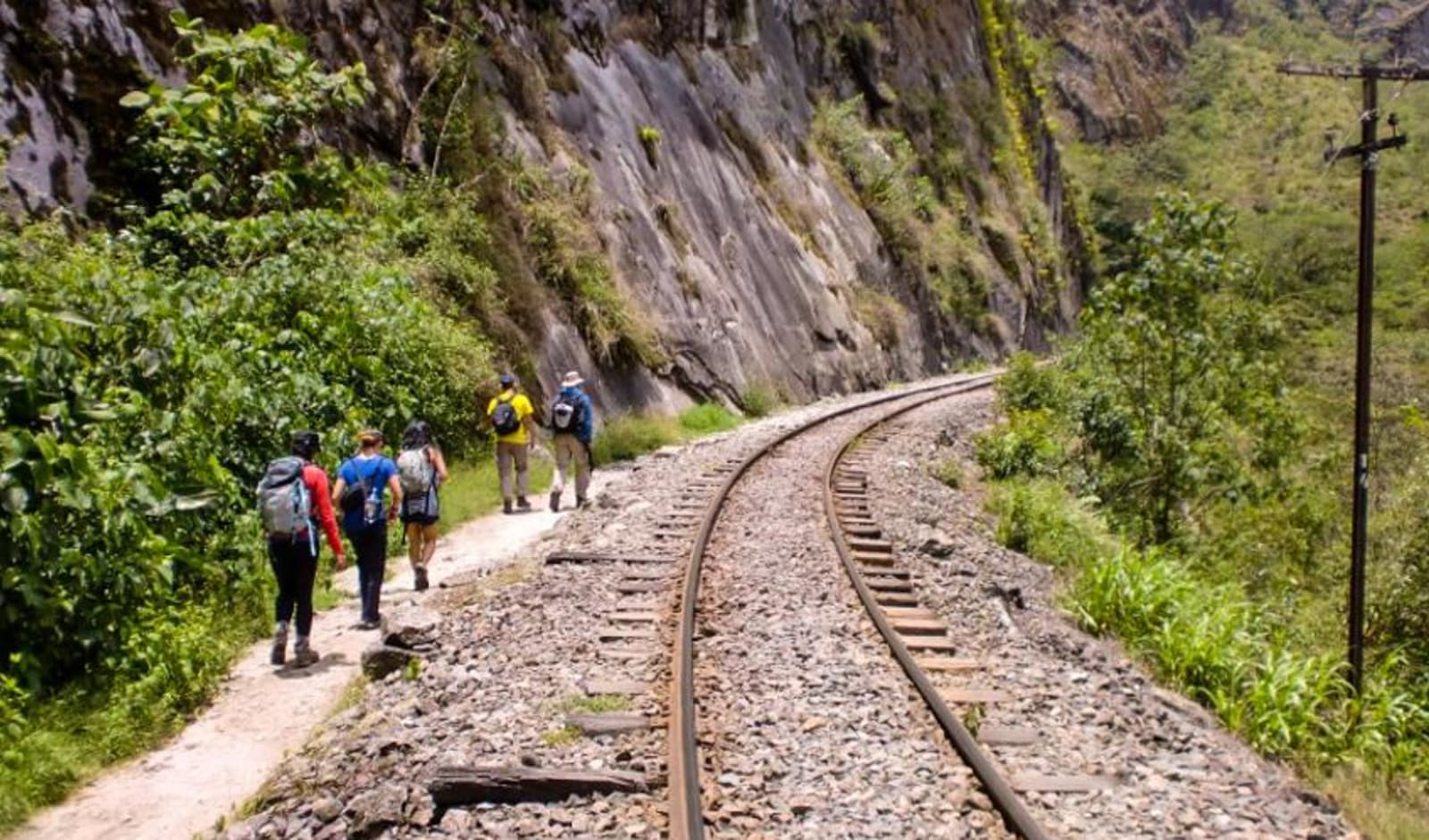
Day 1
Cusco → Cachora → Capuliyoc → Chiquisca
Walking time
4–5 h
Distance
12 km
Climb
+0 m
Descent
−1,350 m
Highest point
2,900 m
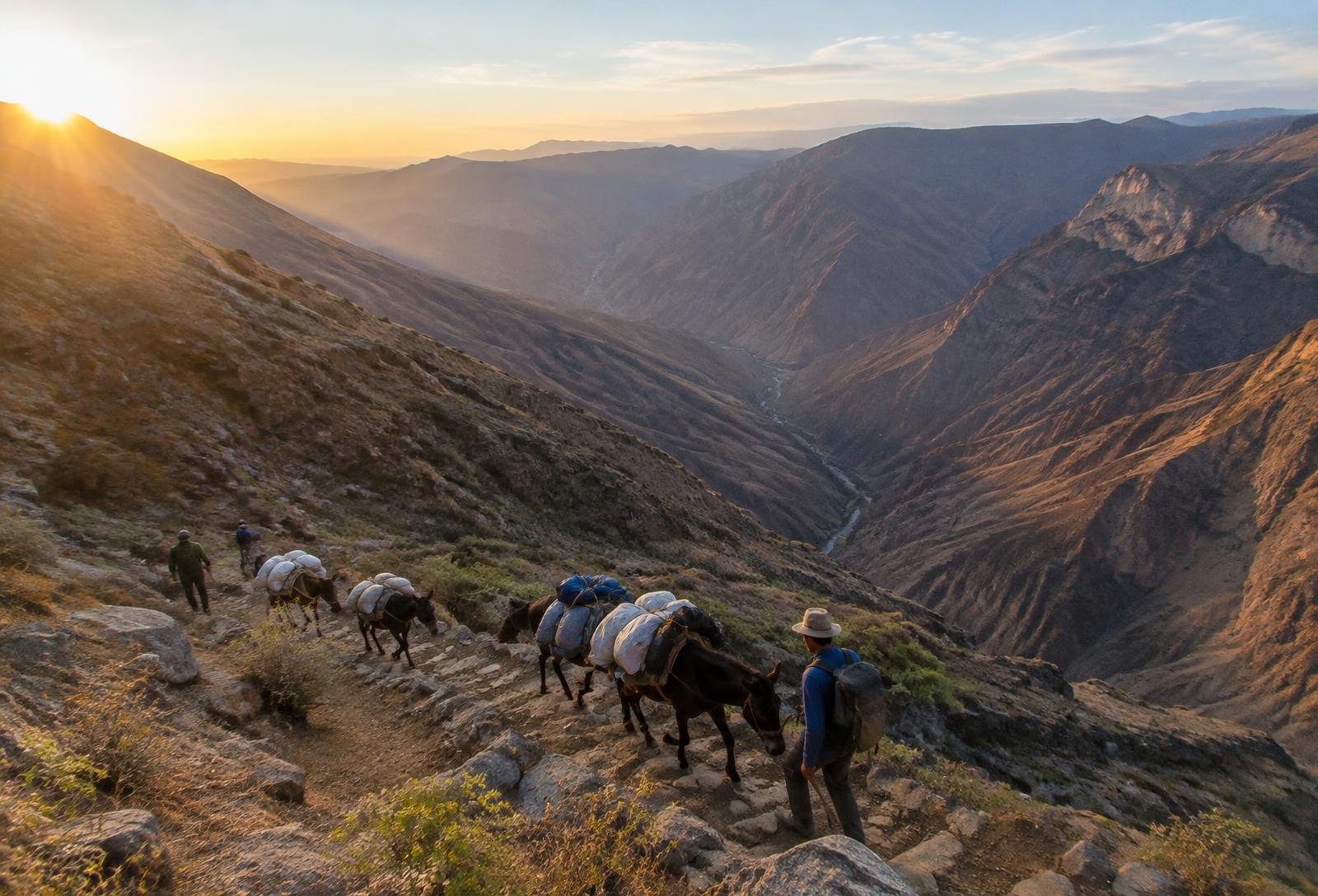
After a scenic drive to Cachora, you stand at the Capuliyoc lookout and see the Apurímac canyon fall away beneath you — over 1,500 m deep. The trail zigzags down into warm, dry air, with condors sometimes circling at eye level. Camp is already up when you arrive.
Departure dates
November 2026
Daily departures all year, no permit needed — book up to 3 days before. Tap a green date to book it.
What's included
- Tents set up by our team, dining tent and kitchen
- Trail chef and all meals listed in the itinerary
- Horsemen and mules / porters for all camping gear and 5–7 kg of your things
- Foam sleeping mat
- First aid kit and emergency oxygen
- Pre-departure briefing in Cusco
- Choquequirao entrance
- Emergency saddle horse
- Machu Picchu entrance and guided tour
- Bus Aguas Calientes ↔ Machu Picchu
- Hotel night in Aguas Calientes
- Train to Ollantaytambo and transfer to Cusco
Not included
- Travel insurance (required)
- Hotels in Cusco
- Airport transfers
- Tips for the crew
- Meals not listed
- Sleeping bag and trekking poles (available to rent)
- Riding mule (on request)
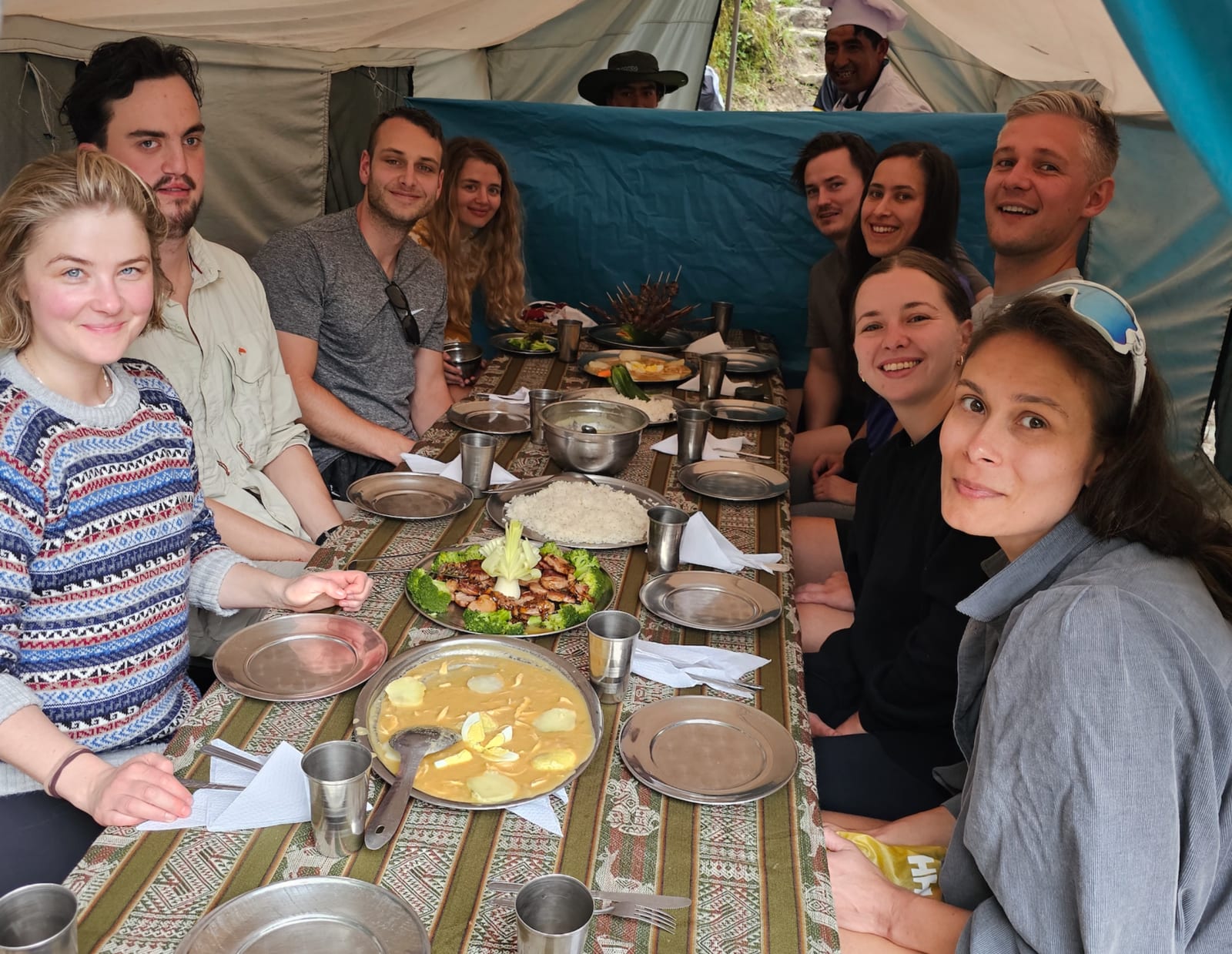
Trail chefs and the people behind your trek
Our chefs cook three hot meals a day — quinoa soup, lomo saltado, fresh trout, Andean herbal teas — with vegetarian, vegan and gluten-free options. Our crew are Quechua men and women from the communities around Cusco. We pay them fairly, respect legal load limits and support their families through our community program.
How hard is it? Level 5 of 5 — Challenging
Challenging. Long days of 7–8 hours with big climbs and descents, for nine days in a row. You should be a regular hiker with multi-day experience and spend 3 days in Cusco to acclimatize.
Our difficulty scale
Every trek we run is rated from 1 (easy) to 5 (hard). This one is a 5.
- 1Easy
Gentle walks of 2–4 hours, little climbing. Anyone in normal health.
Unique City Tour: Inca Trail, Alpacas & Ruins
- 2Moderate
4–6 hours a day with some climbs, mostly below 3,500 m. Regular walkers.
Short Inca Trail (Express) · Inca Jungle Trek
- 3Active
5–7 hours a day, steady climbs and passes up to around 4,000 m. Good basic fitness.
Lares Trek to Machu Picchu · Inca Quarry Trek to Machu Picchu · Rainbow Mountain Trek · Salkantay & Humantay
- 4Challenging
6–8 hours a day on steep stone steps, one or more passes above 4,000 m. Fit hikers who train beforehand.
Classic Inca Trail · Lares Fusion Inca Trail · Salkantay Fusion Inca Trail · Salkantay Trek to Machu Picchu · Salkantay Trek to Machu Picchu
- 5Hard
Long, remote days, big daily climbs and high passes near 5,000 m. Experienced, very fit trekkers.
Choquequirao Trek to Machu Picchu · Ausangate Trek
Best time to go
Best April–November. Open all year, but December–March brings mud and rain; we'll advise you honestly.
- Jan
- Rainy season: muddy trails and cloud on the passes, but lush valleys and quiet campsites.
- Feb
- Wettest month, yet open — the Inca Trail closes, so this route is the way to walk to Machu Picchu. Good rain gear is a must.
- Mar
- Rain eases toward the end of the month. Waterfalls at their fullest.
- Apr
- Rains fade, everything is green. A great shoulder month.
- May
- Dry season begins. Clear views of the glaciers — one of the very best months.
- Jun
- Dry and sunny, cold nights at the high camp. Inti Raymi in Cusco on 24 June.
- Jul
- Peak season: the most reliable weather and the clearest mountain views.
- Aug
- Dry, clear and lively on the trail. Book early for Machu Picchu tickets.
- Sep
- Still dry, warmer nights and fewer hikers.
- Oct
- Mostly dry with the first afternoon showers. Good value.
- Nov
- Mixed weather — sunny mornings, some afternoon rain.
- Dec
- Rainy season returns. Fewer hikers and festive Cusco.
Frequently asked questions
What is Choquequirao?
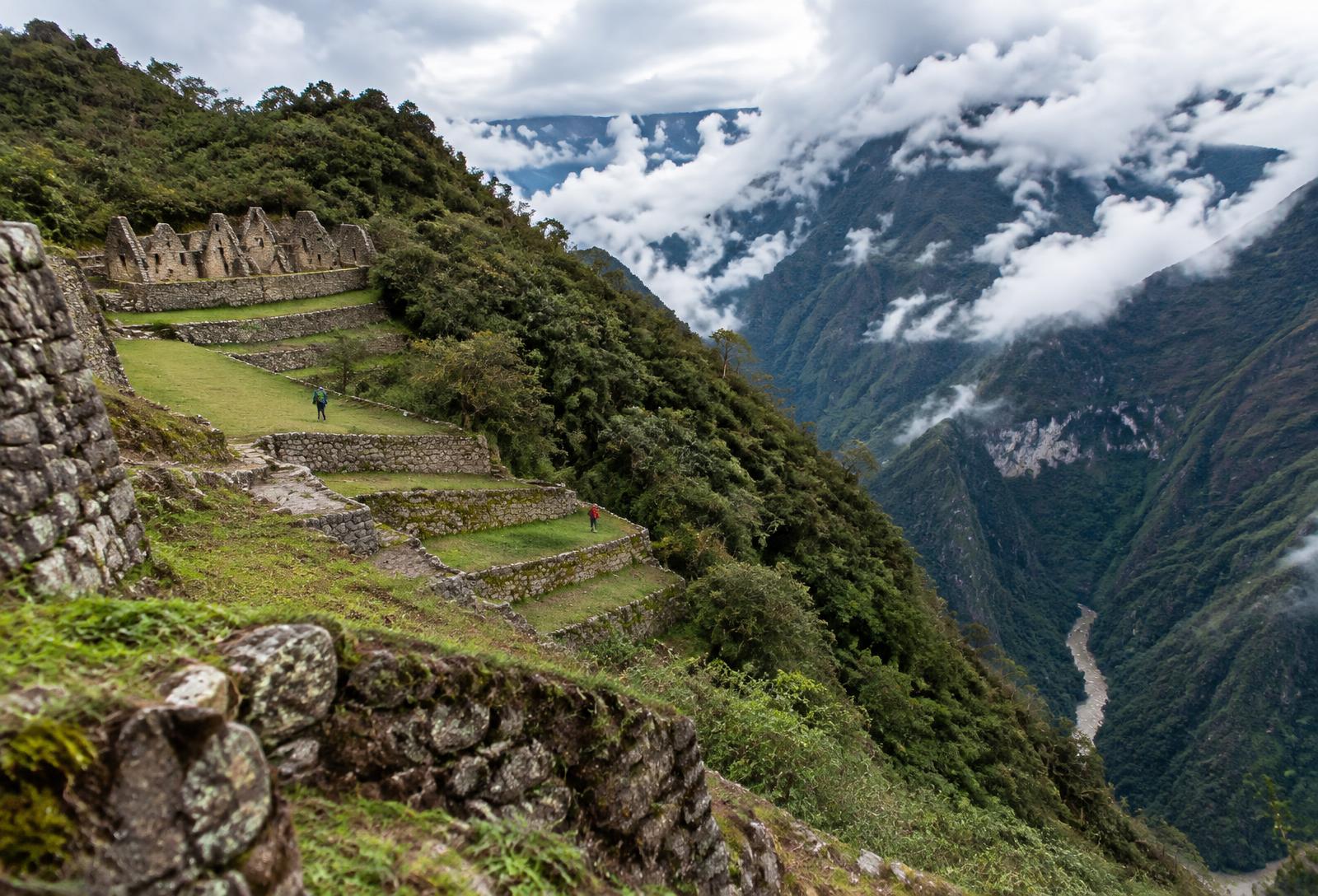
An Inca city on a ridge above the Apurímac canyon, as large as Machu Picchu but reachable only on foot — you may share it with a handful of people.
How hard is the Choquequirao to Machu Picchu trek?
Challenging (5 of 5): 9 days, three big passes up to 4,600 m and long canyon descents and climbs. For fit, experienced hikers.
Can I ride a mule?
Yes. We bring an emergency saddle horse, and you can book a riding mule for the steepest climbs.
Where do we sleep?
Seven nights camping with our crew and one night in a hotel in Aguas Calientes.
How late can I book the Choquequirao Trek?
Up to 3 days before departure. It needs no Inca Trail permit, so it leaves every day of the year.
How do I avoid altitude sickness?
Spend at least 2 days in Cusco (3,400 m) before the trek, drink lots of water, avoid alcohol the first days and walk slowly. Our guides carry emergency oxygen and a first aid kit.
Who carries my things?
You only carry a light day pack. Our crew (porters on the Inca Trail, horsemen and mules on Salkantay and Lares) carries the tents, kitchen, food and up to 5–7 kg of your personal gear.
What food is served?
Three hot meals a day plus snacks and tea, cooked fresh by our trail chefs. Vegetarian, vegan and gluten-free diets are available on request.
Is drinking water provided?
Yes, boiled and filtered water from the first lunch onwards. Bring a 1–2 litre bottle.
What should I pack?
Broken-in hiking boots, rain jacket, warm layers, hat, sunscreen, insect repellent, headlamp, water bottle, personal medication, passport and some cash.
Is travel insurance required?
Yes. It must cover hiking at altitude, medical evacuation and trip cancellation.
How much should I tip the crew?
Tips are optional but appreciated. Many hikers give around 40–80 USD per person in total, shared between the crew.
What age range joins your treks?
Most of our hikers are between 25 and 60. Fit hikers older than that walk with us every month — pace matters more than age.
Can I extend my stay or add Huayna Picchu?
Yes. Ask us when booking and we'll add the ticket or move your return train.
Why book with a local operator?
We are based in Cusco and run every trek with our own guides, chefs and crew. No middlemen: your money goes to the people who make your trip.